Planning a California ADU: a homeowner's checklist
Permits, setbacks, utilities, financing — what every California homeowner should figure out before breaking ground on an Accessory Dwelling Unit.
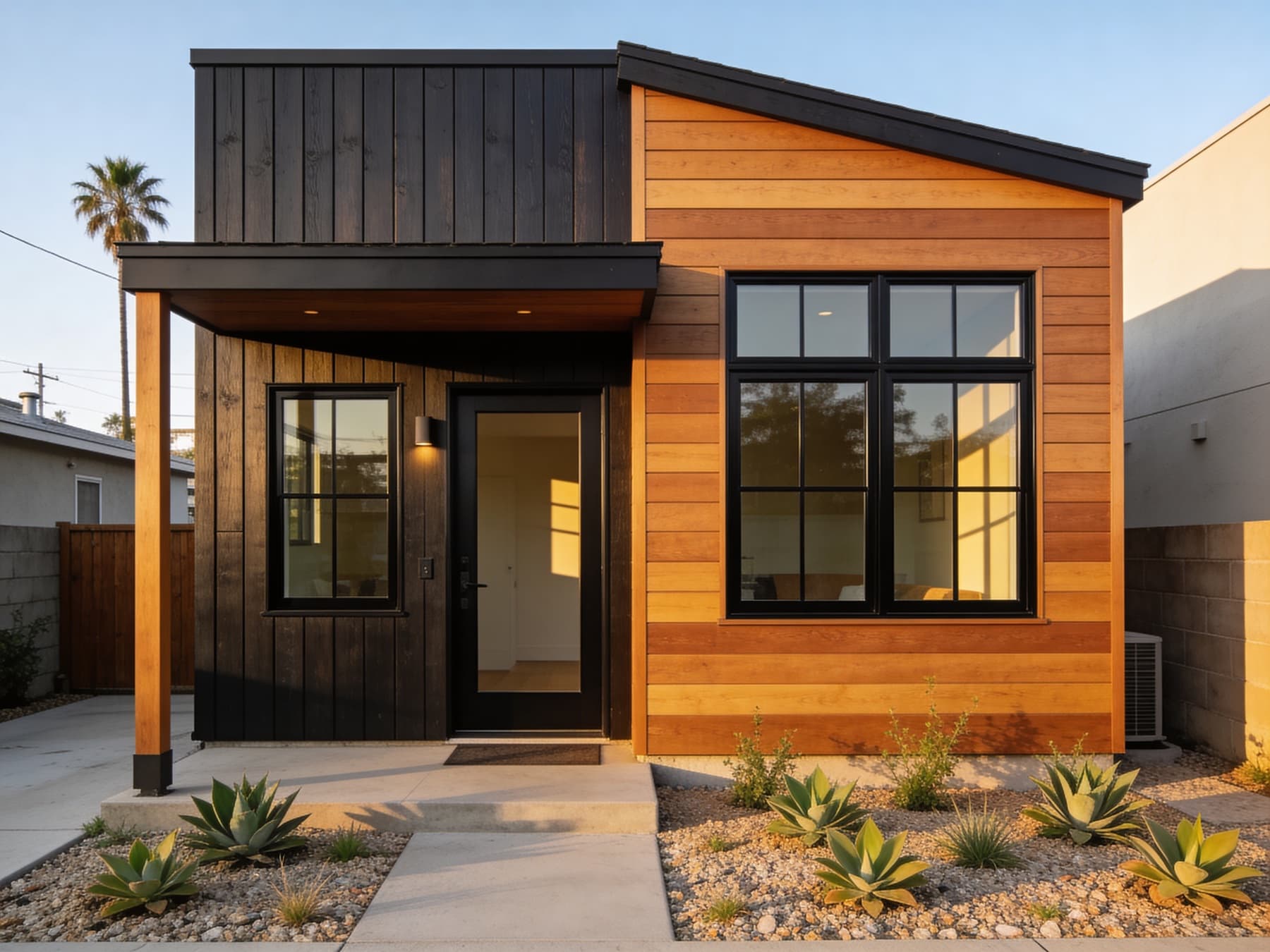
California has made it easier than ever to add an Accessory Dwelling Unit (ADU) to your property, but the planning phase still trips up most homeowners. Done right, an ADU adds livable square footage, long-term rental income, and lasting property value. Done in a hurry, it stalls in permitting and burns through budget on revisions.
This checklist walks through the questions we ask every homeowner during the first consultation — so you can answer them before the meeting and move faster.
1. Confirm what you can build
California state law sets a baseline, but each city and county adds its own setbacks, height limits, and parking requirements. Pull your property's zoning, FAR (floor area ratio), and ADU-specific rules from your city planning portal before you commit to a layout.
If you're in a coastal zone, hillside zone, or fire severity zone, expect added review time and possibly additional reports.
2. Pick the right ADU type
Detached new build, attached to the main home, garage conversion, or junior ADU (JADU): each has different cost, timeline, and resale impact. A garage conversion can be the fastest and cheapest path; a detached new build typically delivers the highest rental income and resale lift.
3. Plan the utilities early
Water, sewer, gas, and electrical capacity dictate more of the cost than most homeowners expect. If your existing service panel can't carry the new load, you may need a panel upgrade — sometimes coordinated with the local utility, which adds weeks.
Some cities require separate sewer connections; others let you share. Confirm before drawings are finalized.
4. Understand the financing path
Most ADU projects are funded through home equity lines, cash-out refinances, or construction loans. Each has different draw schedules and inspection triggers, which affects how the build is scheduled. The earlier this is locked in, the smoother the build.
5. Set the timeline expectation
From first consultation to certificate of occupancy, expect 6–12 months for a standard detached ADU in California. Permitting alone can run 8–16 weeks depending on the jurisdiction. A clear timeline up front prevents the most common source of frustration: surprise.
Ready to get specific?
Every property is different. If you'd like a walkthrough of your lot, your goals, and what makes sense for your timeline and budget, request a free estimate and we'll set up the consultation.
Have a project in mind? We'd love to hear about it.
Get a free estimate